Robots that programme themselves. Not in a lab. In a 100,000 square-foot factory that opened yesterday in California.
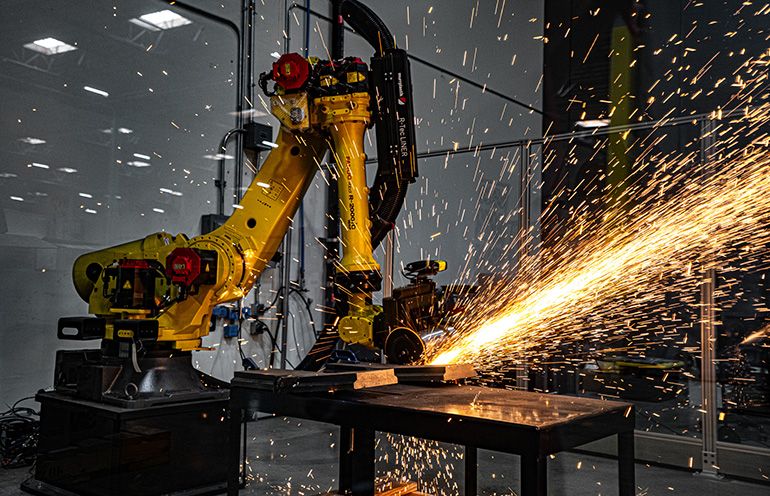
GrayMatter Robotics just launched an AI Innovation Center in Carson with 25+ robotic workcells running live manufacturing tasks. Visitors can watch a robot scan a part it’s never seen before, autonomously generate the toolpath, and start processing it. In under a minute.
No manual programming. No training period. Just show the robot the part.
Oshkosh Corporation and Pierce Manufacturing have already integrated the technology into production. The feedback loop was clear: it worked, so they’re expanding. Deploy time is 2-4 months compared to 18+ months for traditional automation.
This is the shift from “robots do what you programme” to “robots figure out what to do.” Programming has always been a major bottleneck in factory automation. Every part variation needs new code, new testing, new validation. GrayMatter’s approach eliminates that.
This is the ‘exponential gap’ made visible: we can build adaptive robots faster than we can retrain human workforces to programme traditional ones.
When robots teach themselves, the question stops being whether to automate. It becomes how fast your competitors are doing it.