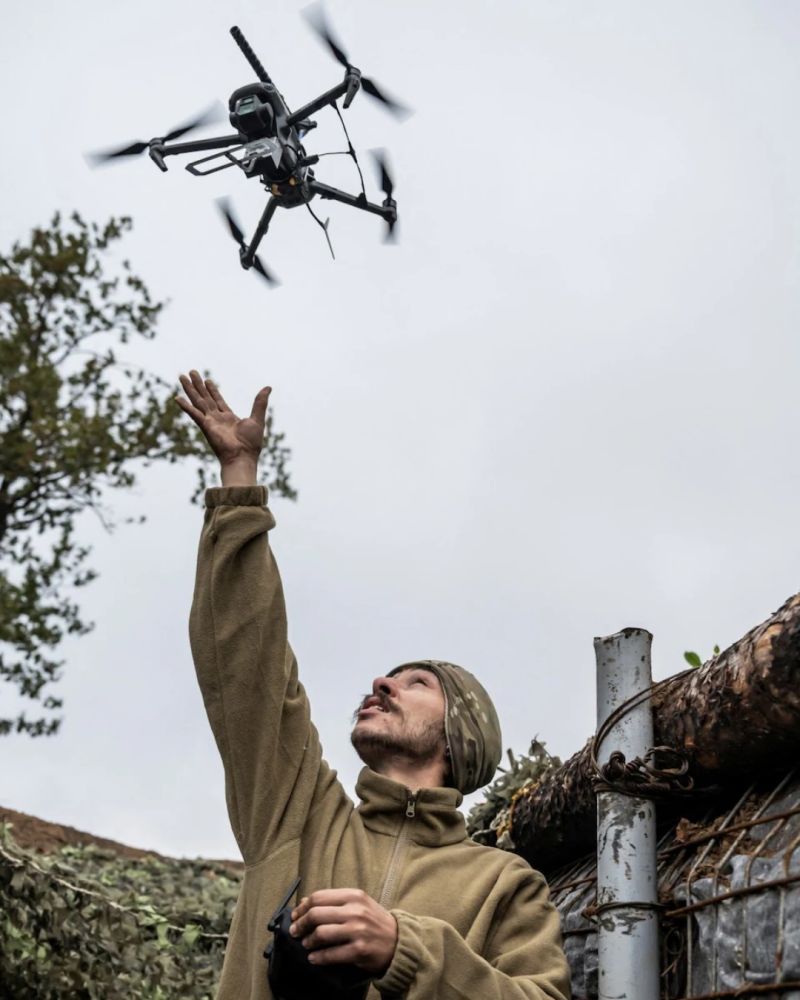
Ukraine built 5,000 drones in 2022. Now it targets 7 million.
Four years ago, Russia expected Kyiv in three days. In the time since, Ukraine has built what may be the world’s first AI-native military.
In the early months of the invasion, Ukrainian forces flew a few thousand drones, many of them repurposed commercial units. By 2024, domestic production hit two million. By 2025, four and a half million.
The target for this year is over seven million, roughly seventy times the output of the United States.
One drone now equals 22 artillery rounds in lethality and accuracy, according to the UK Armed Forces Minister.
AI-guided navigation has pushed strike success from roughly 10-20% to 70-80%. The drone finds its own way to the target.
This is what they built to get there:
→ The Brave1 Dataroom. A secure AI training environment launched in January, designed to autonomously detect and intercept Russian drone swarms. Over 2,000 developers and 4,600 defence products now sit on the Brave1 platform.
→ The “Test in Ukraine” programme. Global manufacturers invited to push drones, robots, and missiles into live combat. The feedback loop between prototype and battlefield measured in weeks.
→ The Diia platform. What started as a “state in a smartphone” has evolved into what officials call an “agentic state.” AI-powered public services running while the country is at war.
None of this was in any defence white paper four years ago. No doctrine anticipated it, no procurement cycle planned for it.
Not because Ukraine wanted to build this. But because the alternative was losing.
Every defence ministry on earth is watching this. The distance between what a nation builds when survival depends on it and what a peacetime bureaucracy procures through committee is now probably the sharpest question in Western defence.
♻️ Repost if someone in your network works in defence or security. 🔔 Follow Felix Ghauri for AI and what changes next. 🗂️ Sources in first comment.
First Comment
Sources: Al Carns (UK Armed Forces Minister) via UNITED24 Media (Feb 2026). Drone production data: Euromaidan Press (Jan 2026), Kyiv Post, OSW Centre for Eastern Studies. AI strike success rates: CSIS “Ukraine’s Future Vision for AI-Enabled Autonomous Warfare” (Feb 2026). Brave1 platform: National Security News (Jan 2026). Diia “agentic state”: CNBC (Feb 2026). Image: Reuters via The Guardian.