Most AI gives you answers. The interesting work happens when you push for consequences.
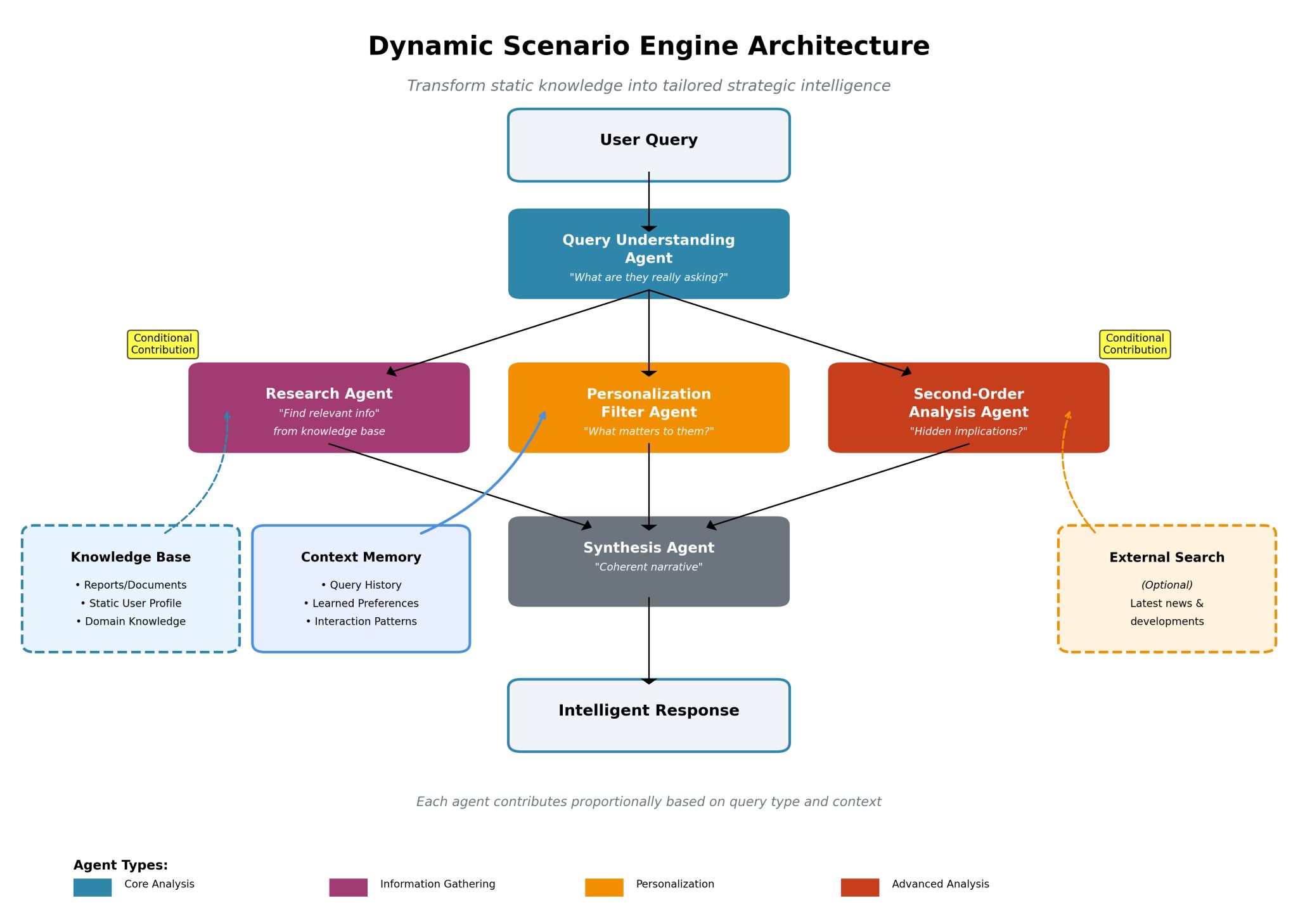
We’ve been experimenting with multi-agent systems that trace second- and third-order effects, mapping cascading impacts across complex systems.
Real example: “Any update on European data-centre regulations?
• Surface answer: “New water-usage restrictions • Hidden insight: “Tech infrastructure migrating to water-rich regions • Strategic impact: “Invest in Nordic data-centre REITs now.
That’s the difference between information and intelligence.
Our seven-agent model includes:
- Sentiment Analysis: Gauging emotional tone and intent.
- Client Query Research: Clarifying unique client contexts.
- Personalisation Gradient: Tailoring insights to individual preferences.
- Second- and Third-Order Effects: Analysing potential future impacts.
- Initial Brief: Crafting the foundational narrative.
- Evaluation: Ensuring accuracy and relevance.
- Final Draft: Polishing insights for executive readiness.
Big shout-out to the stellar folk at AI Build Lab (Sara Davison, Tyler Fisk, Vanessa Chang, Charlie Fuller) as well as Cassidy AI (Justin Fineberg), who’ve been awesome partners.
It’s still at prototype stage: lots of refinement needed, especially around token usage and context memory- but early results suggest that sometimes the best insights come from asking, ‘Then what happens?’