Syria’s shifting sands just delivered a masterclass in unintended consequences.
Iran’s plan to disrupt the Abraham Accords by green-lighting Hamas’ heinous 7th October attack was meant to stall regional realignment.
Instead, it triggered a cascade of second and third-order effects:
- Hamas has been decimated as a military force.
- Hezbollah’s leadership—a cornerstone of Iran’s regional influence—has been severely disrupted, leaving the group weakened and exposed.
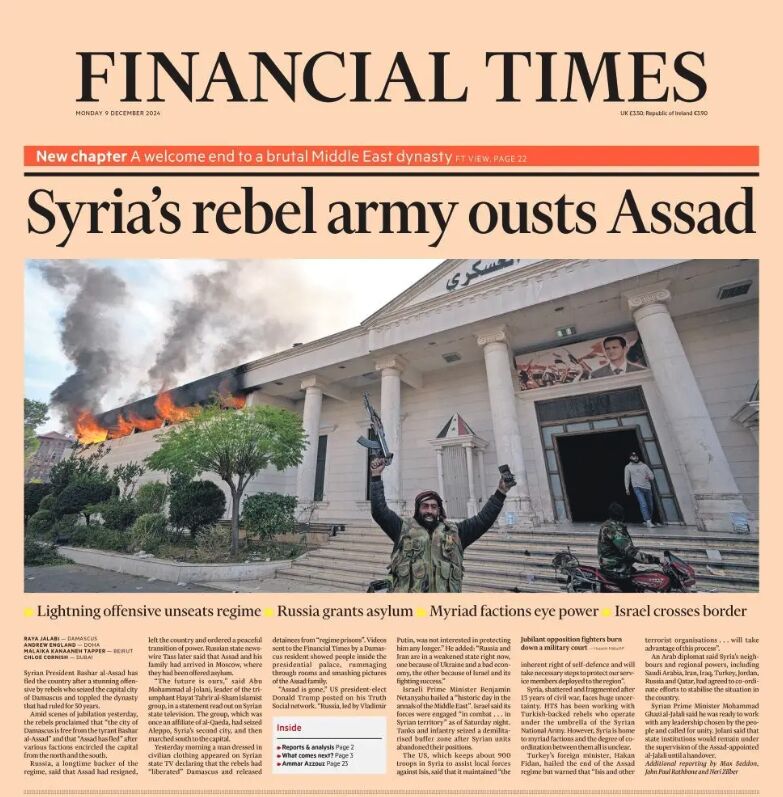
- With key allies in disarray, Iran’s support for Assad’s regime faltered, contributing to its collapse.
- Russia, already strained by its war in Ukraine, finds its regional position diminished as these dynamics unfold.
It’s not that these outcomes were inevitable, more an example of how uncontrollable ripples spread from a single action in a complex web.
Strategic foresight isn’t about predicting every twist and turn. It’s about recognising how actions create ripples, often spiralling into unpredictable consequences.
History loves irony.